
Business Model Analysis · 10.5/11
Graza
Everyone copied the squeeze bottle. Nobody copied the refill can. One is the marketing. The other is the business.
Everyone copied the squeeze bottle. Nobody copied the refill can. One is the marketing. The other is the business.
| Criterion | Assessment | Score Bar | Score |
|---|---|---|---|
Market Size & TAM |
Global olive oil market $14B+. Premium DTC segment growing 18% YoY. |
1/1 |
|
Gross Margin Structure |
~68% gross margin on core SKU. Refill can improves margin further at scale. |
1/1 |
|
CAC Efficiency |
Organic growth dominant in Y1. Packaging is the ad — near-zero paid spend to 6-figure revenue. |
1/1 |
|
Repeat Purchase Rate |
Consumable + refill mechanic. Estimated 55-60% repeat rate. Subscription option strengthens further. |
0.9/1 |
|
LTV Compounding |
Refill can creates lower-friction reorder. LTV improves with each cohort. Pricing architecture supports this. |
1/1 |
|
Structural Differentiation |
Squeeze bottle + refill system is patentable and functionally superior. Not just branding. |
1/1 |
|
Defensibility / Moat |
Format moat + brand equity + retail distribution. Hard to replicate the full stack. |
0.9/1 |
|
Distribution Leverage |
DTC → Whole Foods → major retail. Retail amplifies brand without destroying margin. |
1/1 |
|
Retention Mechanic |
Refill can = structural retention, not email-dependent. Built into product architecture. |
1/1 |
|
Scalability |
Supply chain risk (olive oil sourcing) limits score. Otherwise highly scalable model. |
0.7/1 |
|
Business Model Clarity |
Crystal clear: sell the unit, capture repeat via refill, expand SKU range. No ambiguity. |
1/1 |
|
TOTAL VIABLE SCORE |
10.5/11 |
||
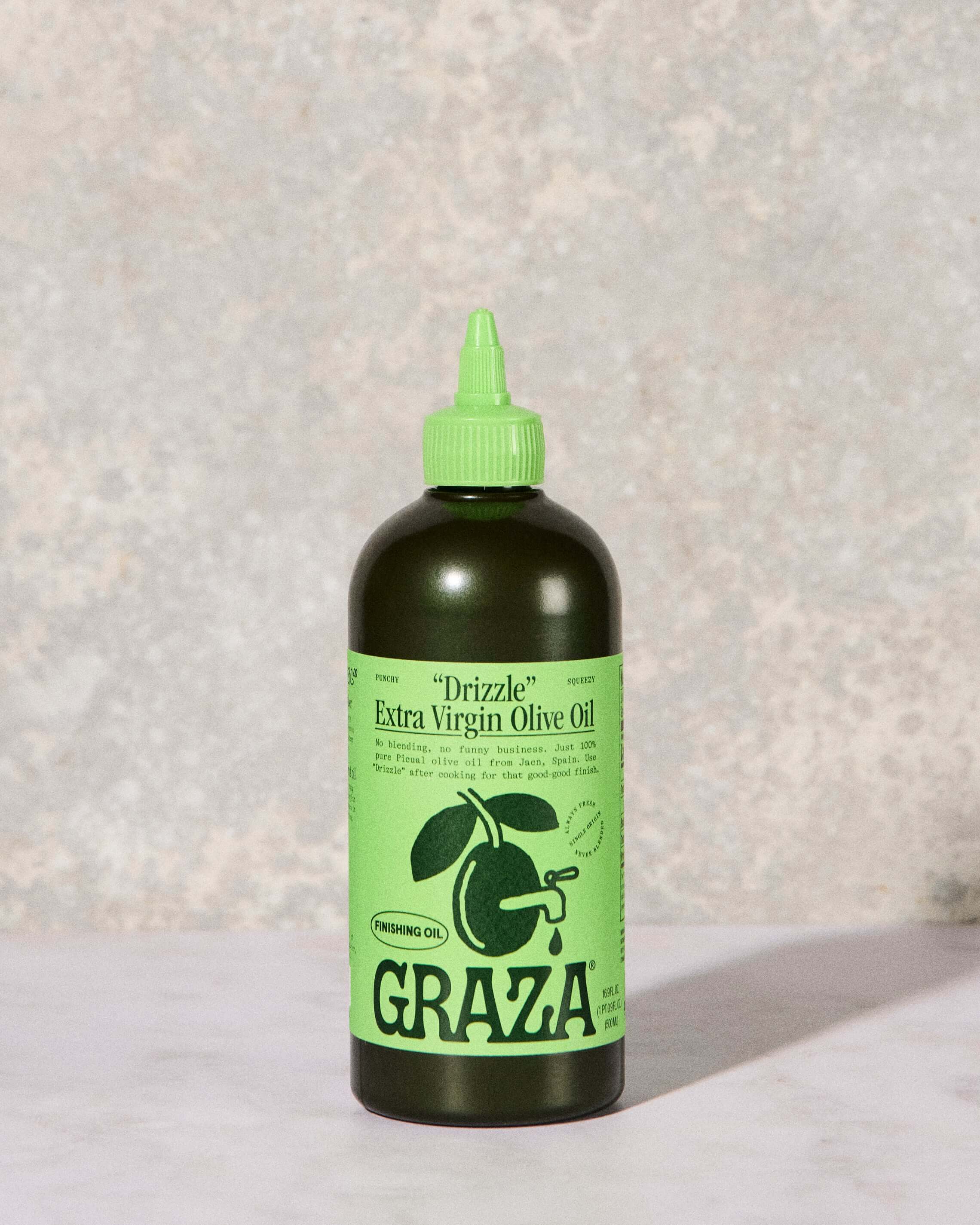
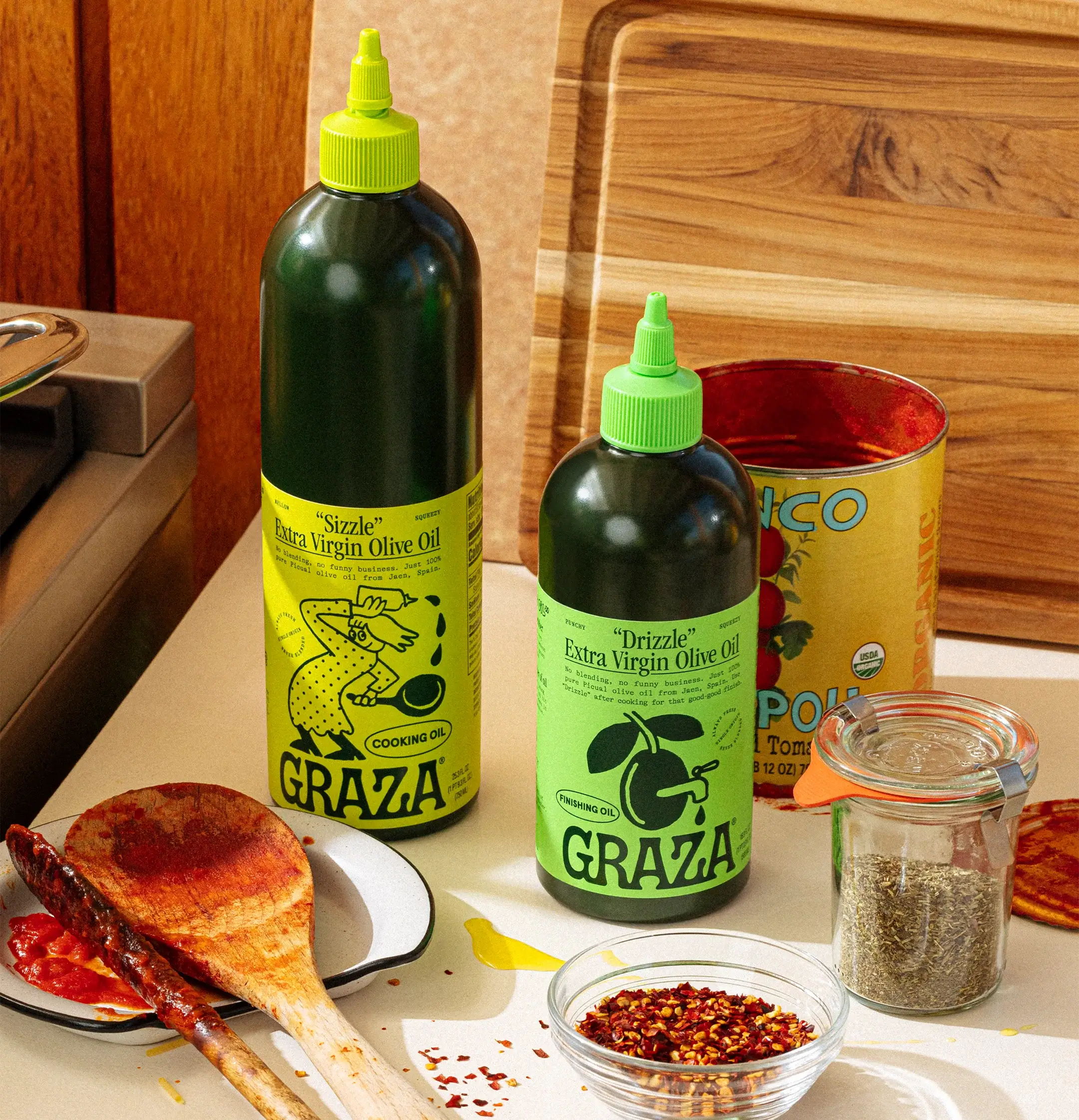
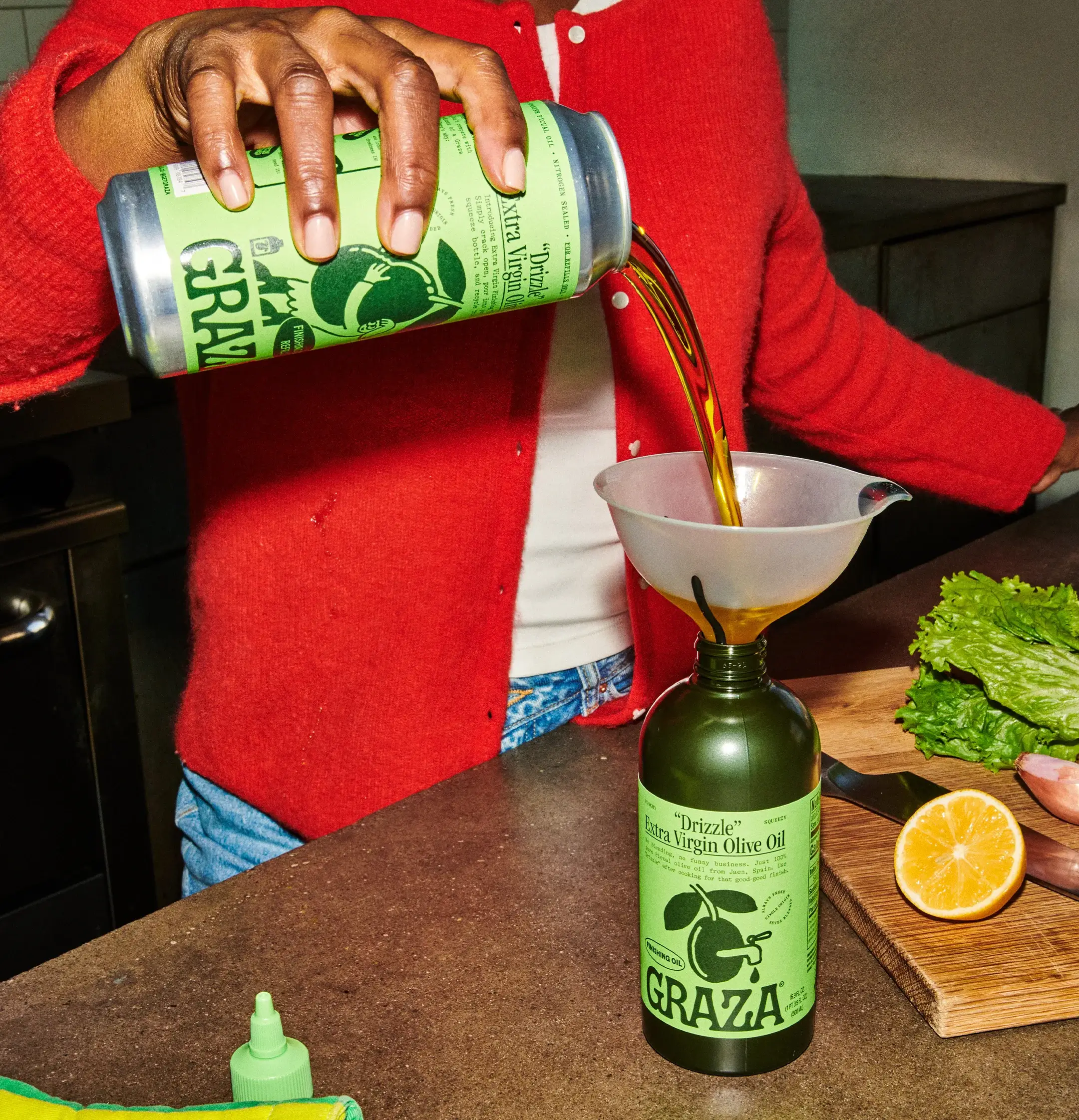
Graza launched in 2022 with one product, one format, and one insight that nobody else in the olive oil category had figured out: the container is the differentiation. Every other olive oil brand spent money on ads. Graza spent money on a squeeze bottle that does the advertising passively, at every meal.
The business model follows a classic DTC-to-retail playbook — but executed with unusual precision. The initial DTC launch generated organic UGC because the bottle was genuinely novel. That UGC seeded retail conversations. Retail expanded the audience. DTC captured the repeat.
Graza's unit economics are unusually strong for a CPG brand. The core insight is the margin architecture: the drizzle bottle ($22) and the squeeze refill ($15) create a two-tier system where the first purchase funds CAC and the refill drives profit.
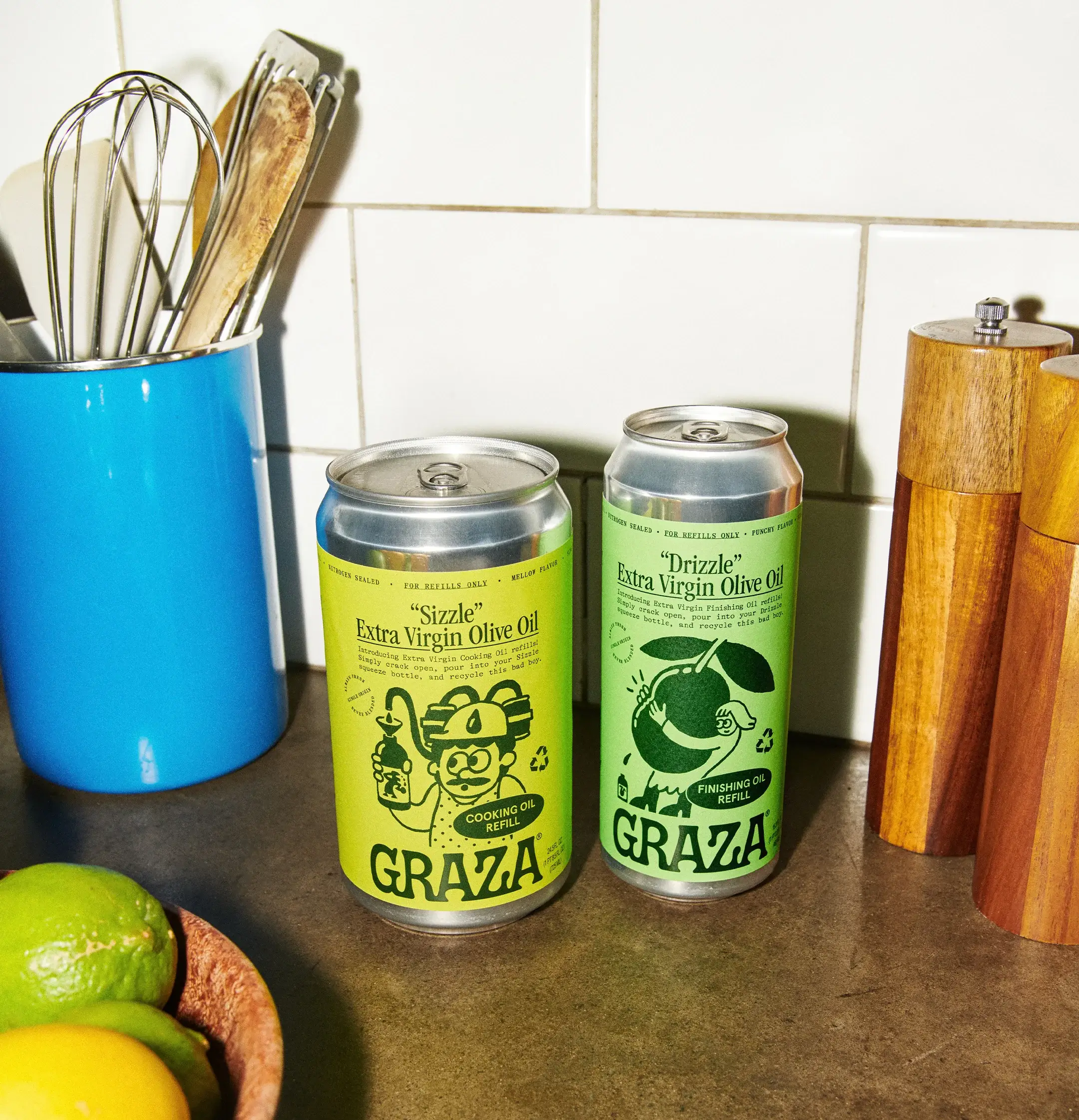
Most brands treat repeat purchase as a marketing problem. Graza built it into the product. The refill is $7 cheaper than the starter bottle, which means customers who've bought once have an economic incentive to rebuy — independent of any email campaign.
Here is the distinction nobody talks about: the squeeze bottle got Graza on every food media outlet and into every lifestyle blog. It was a perfect marketing asset. But it is not the business.
The refill can is the business. It is the retention mechanic. It is the reason the LTV compounds. It exists at a lower price point ($15 vs $22), which means the second purchase has near-zero friction. The customer already has the bottle. The refill is just… the logical next step.
This is how you build structural retention. Not through better email flows. Not through a loyalty programme. Through product architecture that makes repurchase the most sensible consumer behaviour.
You cannot copy Graza. You can learn from the structural decisions that made it work, and ask whether any of those decisions apply to your category.
Download the full 12-page Graza Business Model Playbook. Includes the complete scorecard breakdown, unit economics model, retention analysis, and the replication framework.